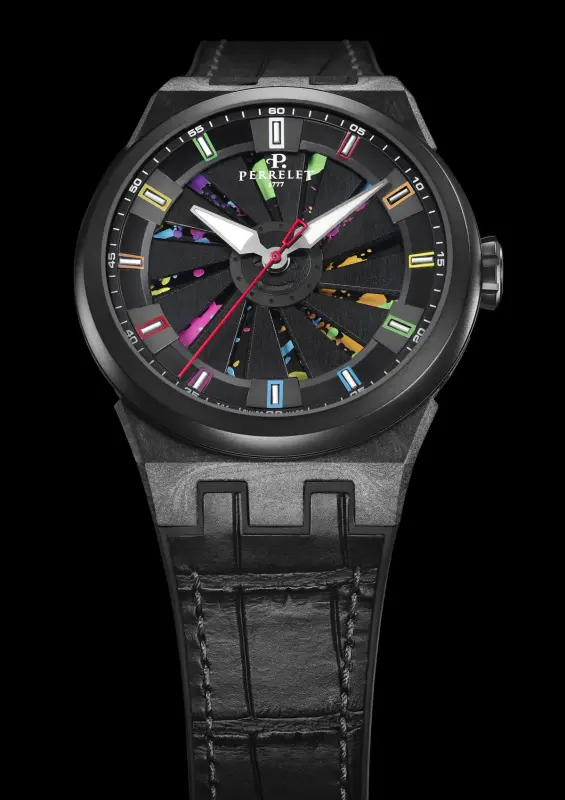
The new Perrelet Turbine Splash is not named for aquatic sports, nor is it summer-themed. The Splash name is actually a reference to the ‘splashes’of colours used on the lower dial, and the manner in which they have been applied – the dial, with its double rotor and familiar twelve-bladed turbine, which for this model are made from black anodised aluminium with five tungsten counterweights, features ‘splashes’ of colour inspired by the work of Jackson Pollock.
Neon green, yellow, violet, fuchsia, light blue, and orange are seen between the blades, which rotate thanks to the motion of the wearer. The hour markers, which are lumed with T25 tritium, are framed by these same colours. The hour and minute hands have Super-LumiNova and the central seconds hand is red.
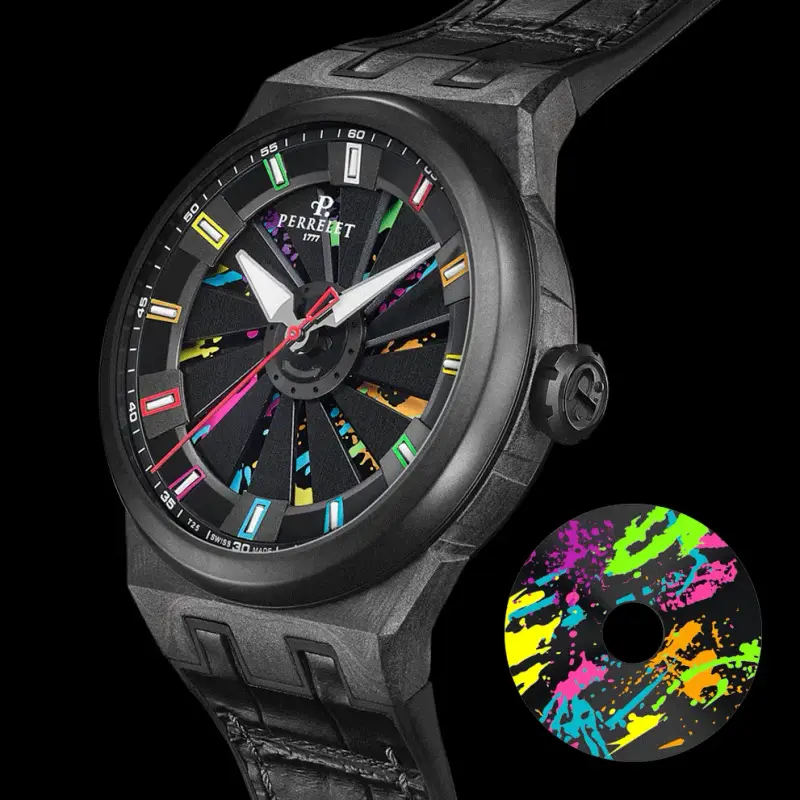
The case itself is 44mm (13.82mm thick) and made from polycarbonate and carbon fibre, which makes it both lighter and more scratch resistant. It features a flat bezel in matte black PVD coated stainless steel, fluted sides, and is water resistant to 100m.
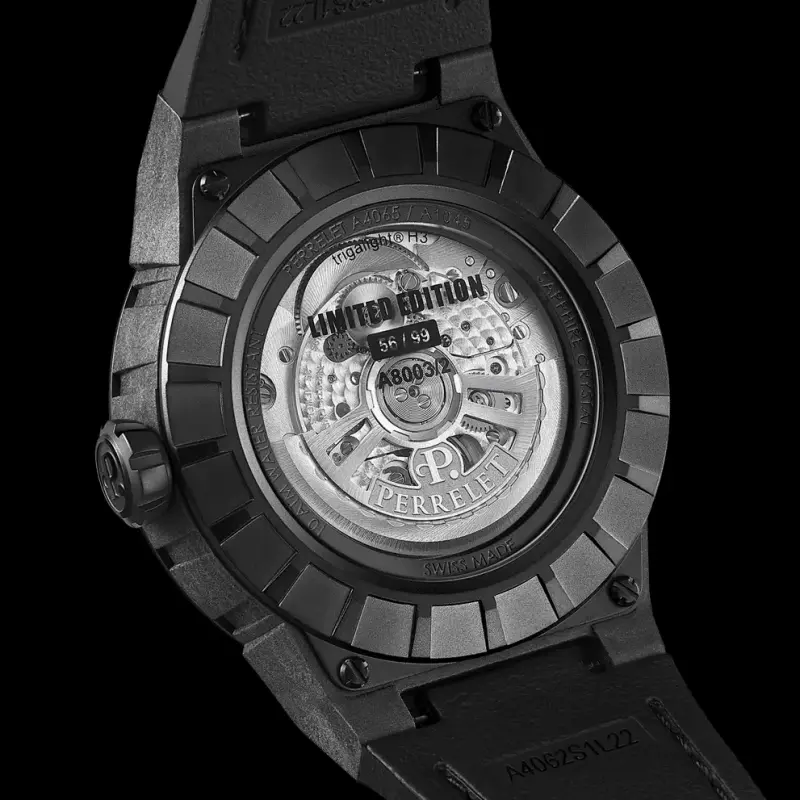
Through the open case back can be seen the Perrelet Turbine Splash is the automatic P-331-MH. With both Chronofiable® and COSC certification, it beats ata 28,800 VPH and has a power reserve of 42 hours. The open-worked rotor is rhodium-plated with arabesque brushing and matte blasting, and has the Perrelet logo. Finishing on the rest of the movement includes perlage on the rhodium-plated bridge, circular graining, and satin-brushing.
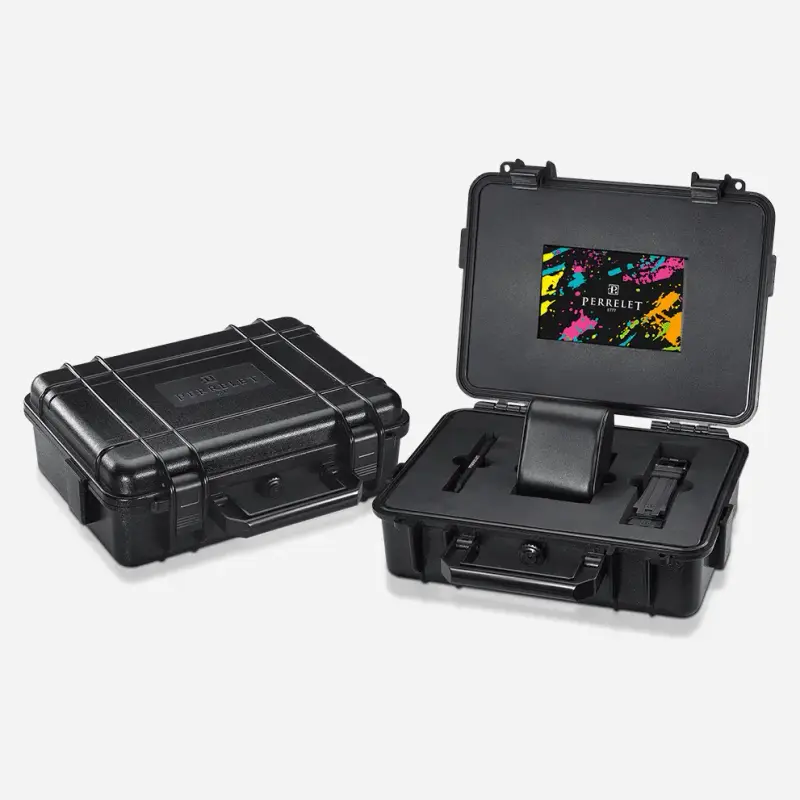
Coming on a black calf leather strap with alligator pattern and rubber lining with a folding clasp in black PVD steel with Perrelet logo, the Perrelet Turbine Splash comes in a tactical box with an additional black rubber strap and a fastening tool. In a numbered limited edition of ninety-nine pieces and with an RRP of EUR 5,200, it is available both from authorised retailers and directly from the brand.
One of Australia’s most (in)famous works of art on display is a work by Jackson Pollock called Blue Poles. Measuring 213cm high by 489.5cm wide and weighing 99kgs, it was purchased by the National Gallery of Australia (NGA) in 1973 for $1.3 million, its acquisition causing public outrage because of the cost – then NGA director James Mollison could not authorise purchases over $1 million, so Prime Minister Gough Whitlam had to give personal approval, and the cost of Blue Poles was made public. To this day it remains arguably the NGA’s most high-profile piece, and its then extraordinary cost now seen as a bargain. Blue Poles itself is seen a significant Pollock work.
[Photo credit: Perrelet]
Categories: Limited Editions, Perrelet, Watch Profile, watches
 HOROLOGIUM
Leave a comment