
There are some dial designs that whilst now considered vintage, seem to activate an almost reflexive (positive) response amongst watch collectors and enthusiasts alike who have a predisposition (if not more), for older watches. Modern versions of such dials are of immediate interest.
One such design, which occasionally pops up, but not enough to constitute any trend as such, is the sector dial. With no dictionary definition of what constitutes such a dial, even with the slight variations, you tend to know it when you see it. There are some key attributes. Firstly, there are two concentric rings, one for the minutes and one for the hours. Secondly, the hour and minute markers should be radial lines that join the inner and outer edges of the rings (thus creating the ‘sectors’), and there may or may not be numerals to mark the quarter hours (Jaeger-LeCoultre’s Master Control from 2017 being perhaps the most well known recent modern example from a large brand, but Longines’ Heritage Classic Black Sector Dial being another). The classic layout format uses a thicker line for the hour markers. The central area of sector dial is usually left clean. Classic sector dials are all about open clear dials with clear marking of hours and minutes on discrete tracks. Also, it is common there to be a mix of finishing on these types of dials.
Raymond Weil is a not a brand that would probably come immediately to mind when thinking about such dials, but they have released a launch collection called ‘Millésime’ (‘vintage’ in French) with two models – Reference 2925 and Reference 2930, one with a centre seconds, and the other with a small seconds at 6 o’clock.
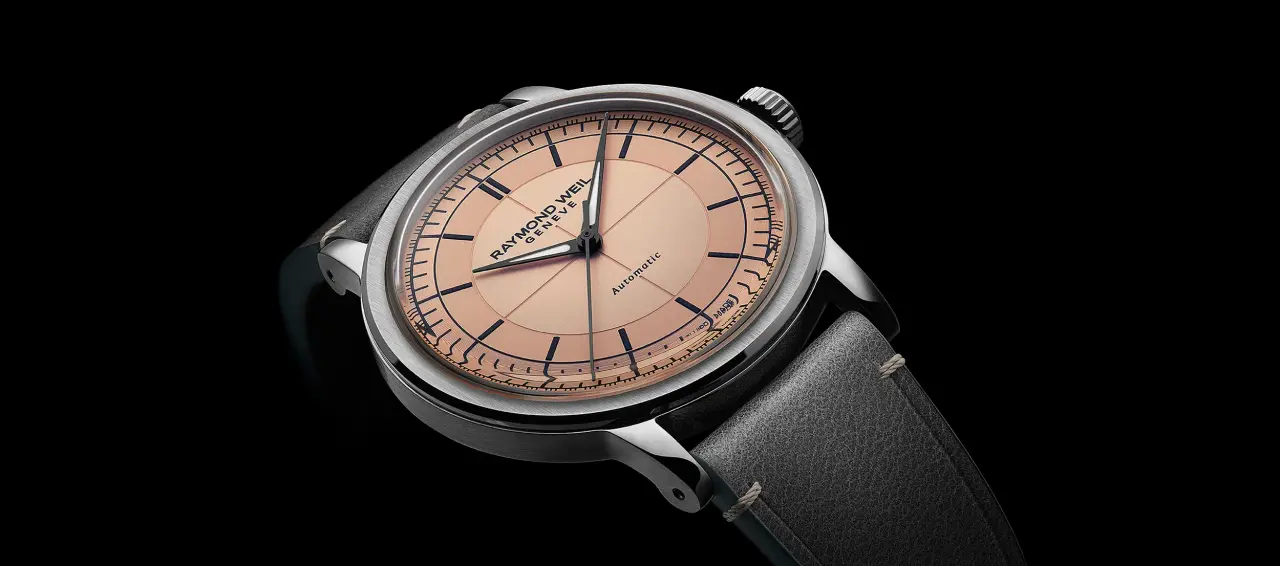
Both models come in a 39.5mm case and the small seconds version recently won the Grand Prix de l’Horlogerie de Genève (GPHG) 2023 ‘Challenge Watch Prize’. The inaugural models consist of two dial variants for the Small Seconds model (anthracite or silver), and four for the Centre Seconds model (anthracite, blue, silver, and salmon – the final one of these being the only model not in a stainless steel case. It is rose gold PVD).
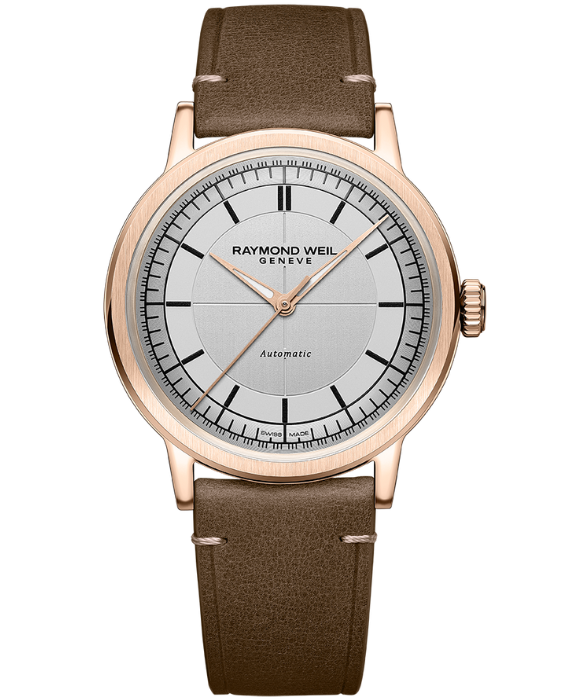
The case diametre is the same, but the thickness is not – the Small Seconds is 10.25mm thick and the Centre Seconds is 9.25mm thick. Both have a fluted crown with a RW monogram. The bezel on both models has vertical satin brushed finishing, and a polished bevel.
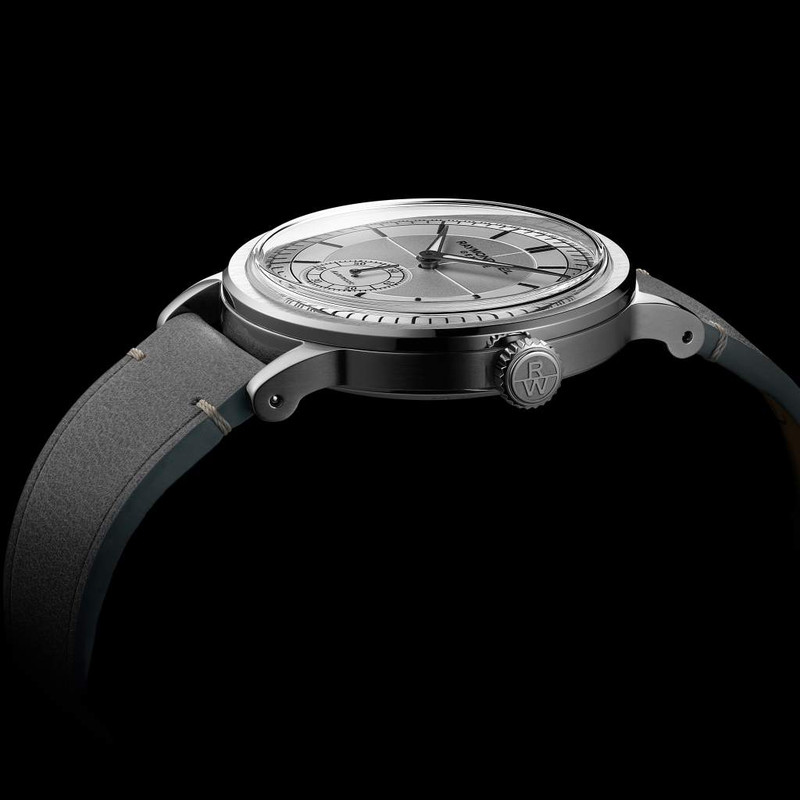
With the exception of the rose gold model, which has matched metal hands, the hours and minutes hands of the other stainless steel models are silver-toned, and all models have Super-LumiNova® on the hands.
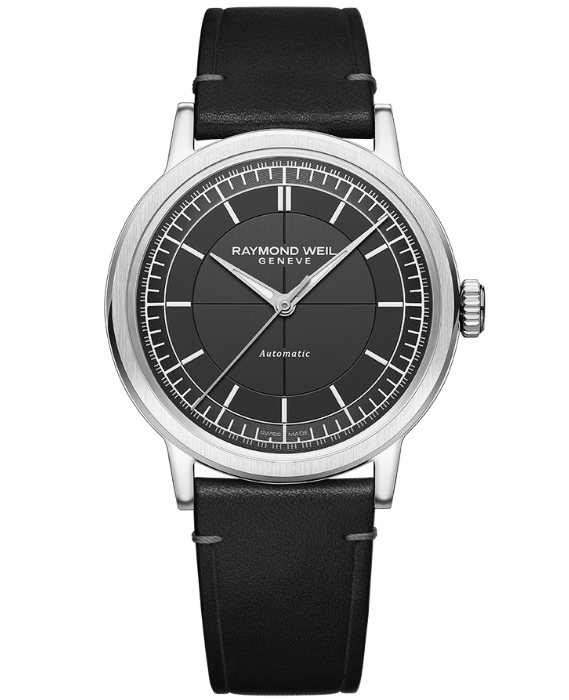
As mentioned, the sector dial features the hours, minutes and seconds periods on discrete tracks, and there are the expected contrasting finishes – the hour track is smooth, the minute track is snailed, and the central area is vertically brushed. The 2930’s small seconds display at 6 o’clock is in a recessed circle.
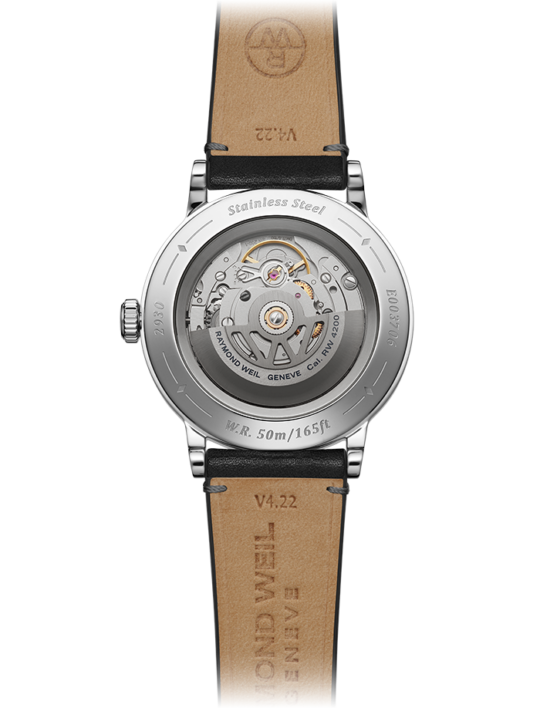
Behind the open case backs are automatic movements for both references, with W-shaped oscillating weights. The Millésime Small Seconds is powered by the automatic RW4251 movement which has a power reserve of 38 hours, and the Millésime Centre Seconds uses the automatic RW4200 which also has a power reserve of 38 hours.
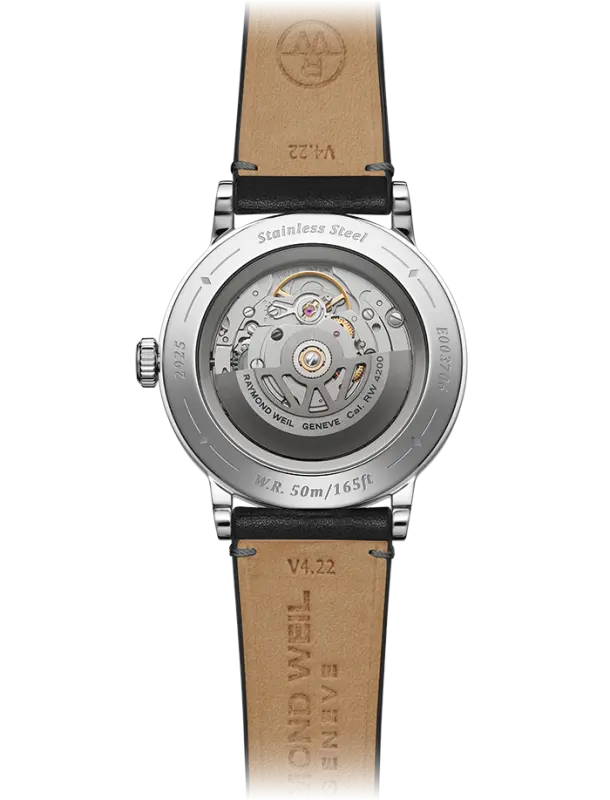
Each model comes on a calf strap with a W-stitched detail. The stainless steel The Millésime Small Seconds has an RRP of CHF 1,895 (including taxes), the stainless steel Millésime Centre Seconds is CHF 1,575 (including taxes), and the rose gold Millésime Centre Seconds is CHF 1,695 (including taxes).
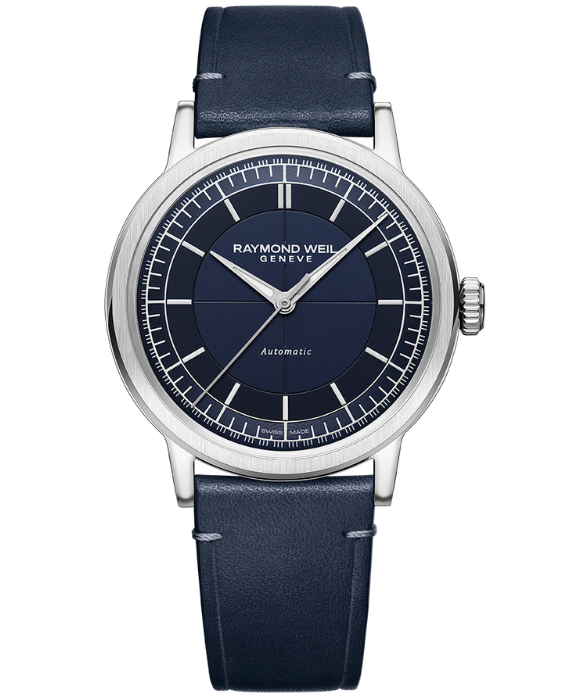
A decently executed sector dial watch is a handsome thing to have on your wrist, and this unexpected segue for Raymond Weil, coming in an accessible case size and equally accessible price, falls into this category. It’s a good-looking piece at a good-looking price.
[Photo credit: Raymond Weil]
Categories: Raymond Weil, Watch Profile, watches, Women's watches
 HOROLOGIUM
Leave a comment